Dhuri, 17 November:- In view of the concerns and apprehensions expressed by residents of nearby villages regarding the Harp Chemicals factory located in village Jahangir, the District Administration and the Punjab Pollution Control Board jointly launched an extensive inspection and sampling drive today. As part of the exercise, teams from the National Institute of Hydrology (NIH), Roorkee, a national-level expert institution, and the Punjab Pollution Control Board collected samples of water, soil and ash.
Providing details, SDM Dhuri Jasleen Kaur Bhullar said that the District Administration was conducting the entire investigation process with complete transparency. The main objective was to clarify the situation through scientific examination and facts and to ensure the protection of the health of local residents and the environment. She made it clear that if any violation of prescribed environmental standards or regulations was found at any level during the investigation, strict legal action would be taken against the concerned company.
The SDM stated that the factory was established in 2024 and primarily produces ethanol. Following complaints regarding the factory in February-March 2026, officials of the Punjab Pollution Control Board inspected its pollution-control arrangements on 26 March 2026, including the Effluent Treatment Plant (ETP) and Sewage Treatment Plant (STP). According to the reports received at that time, the performance of these arrangements was found to be in accordance with the prescribed standards.
She further said that after a video surfaced on 4 June 2026 showing black water flowing for some time from a borewell in village Kalabula, teams of the Punjab Pollution Control Board from Sangrur and Patiala visited the site and conducted an inspection. During this exercise, water samples were collected from two borewells inside the factory as well as from borewells in villages Jahangir, Ghanouri Kalan and Kalabula. In addition, on 8 June, water from borewells within a radius of 500 to 700 metres of village Kalabula was tested against 30 different parameters.
She added that after fresh complaints were received from villagers and village heads during August and September, inspections were conducted again on 18 August and 18 September. During the inspection on 18 September, a case of water leakage came to light while ash generated by the factory was being transported. In view of the factory's Zero Liquid Discharge (ZLD) arrangements, the Punjab Pollution Control Board issued a show-cause notice to the company. During the hearing conducted by the Board Chairman in this matter, the company stated that the ash was being sent for use at the playground in village Salempur at the request of the village Sarpanch.
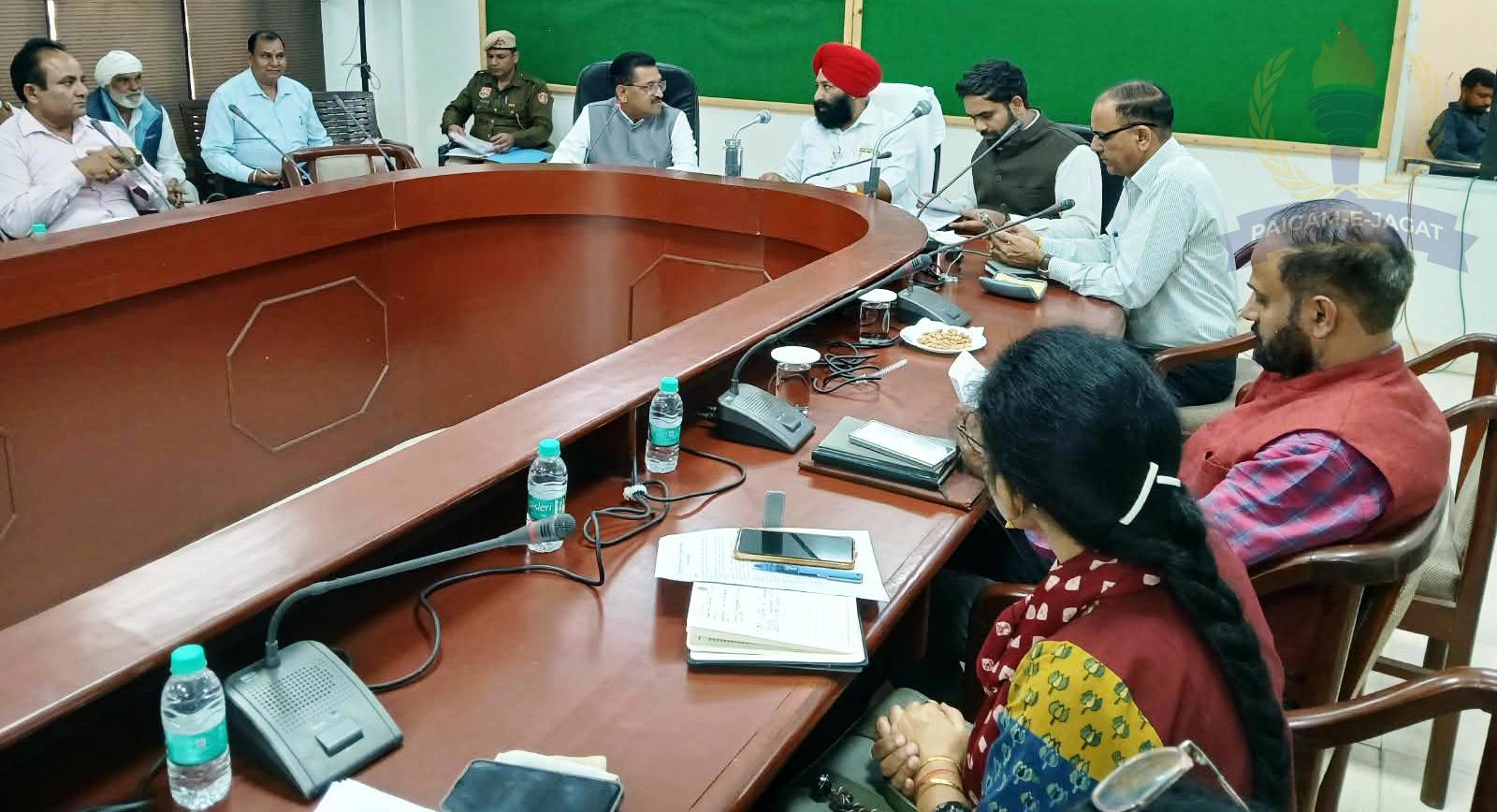
The SDM said that to make the investigation process more transparent and ensure the satisfaction of villagers, the Chairman of the Punjab Pollution Control Board had constituted a joint committee. The committee includes the SDM Dhuri, an Executive Engineer of the Punjab Pollution Control Board and a representative committee of villagers. Today's sampling and inspection are being conducted under the supervision of this committee.
Under the ongoing investigation drive, experts from the National Institute of Hydrology, Roorkee, are collecting water samples from two borewells inside the factory, as well as from borewells in village Jahangir in the upstream area and villages Ghanouri Kalan, Kalabula and Bamal in the downstream areas. Expert teams are also collecting soil and ash samples from locations inside and outside the factory where ash has been deposited, so that the quality of the soil and its possible impacts can be scientifically analysed. These samples will be sent to Punjab Agricultural University, Ludhiana. Similarly, a special team of the Punjab Pollution Control Board is collecting samples to assess air quality at the factory chimney and in the surrounding area.
In addition, the Agriculture and Soil Conservation Department has been directed to conduct a detailed survey of crop yields and soil health in the nearby fields to assess the condition of agricultural areas surrounding the factory.
Keeping in view the health-related concerns raised by villagers, special medical screening camps will also be organised in the village starting tomorrow. Coordination has been established with various hospitals and medical teams to provide free health check-ups to residents, identify their health-related problems and ensure treatment as required.
The SDM said that the District Administration was continuously monitoring the entire process and the investigation was being carried out scientifically with the cooperation of all concerned institutions. She said that further action would be taken on the basis of the investigation findings. It would be ensured that prescribed environmental standards were followed and that no compromise was made with the health and safety of local residents.