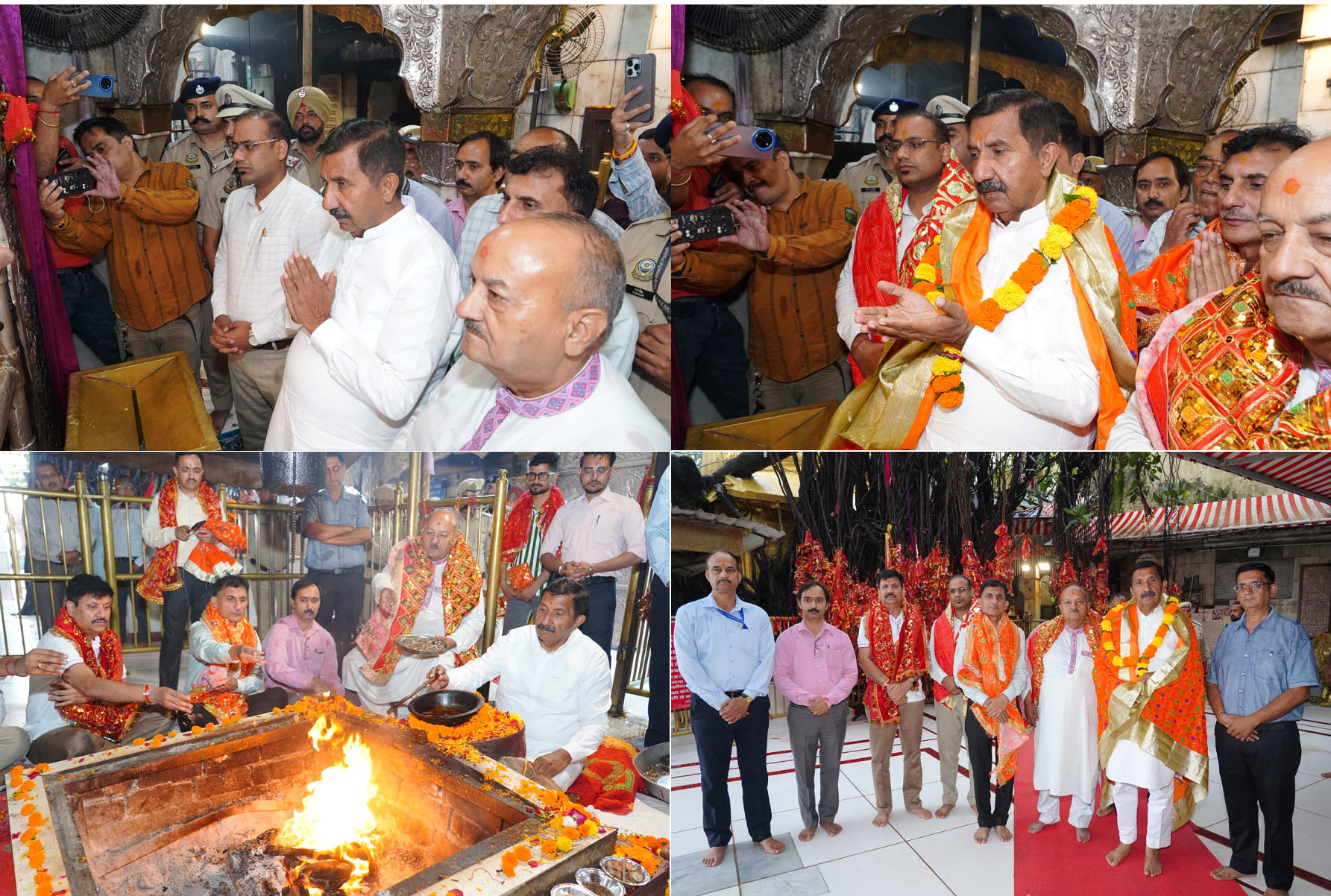

Nalkheda/Madhya Pradesh/Hoshiarpur, September 30:- Located on the sacred banks of the Lakundar River in Nalkheda of Madhya Pradesh’s Agar-Malwa district, Maa Baglamukhi Temple holds a special place among the country’s major centres of Baglamukhi worship. Maa Baglamukhi is worshipped as the eighth Mahavidya among the ten Mahavidyas, and the temple at Nalkheda has long been regarded as an important centre of spiritual practice, religious rituals and devotion. The Madhya Pradesh government’s district administration website also describes the temple as an ancient religious site situated on the banks of the Lakundar River and mentions the belief connecting it with the Dwapara Yuga.
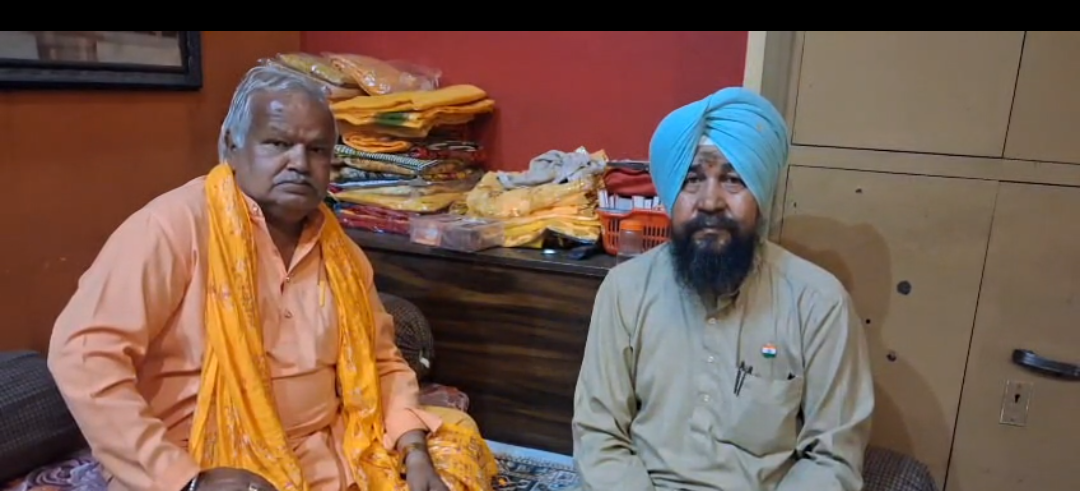
In a special conversation with Senior Correspondent Daljit Ajnoha, temple head priest Manohar Das Pandey discussed in detail various aspects related to the temple’s ancient traditions, worship of Maa Baglamukhi and the religious significance of Nalkheda Dham.
According to head priest Manohar Das Pandey, the tradition of Maa Baglamukhi Temple at Nalkheda is associated with the period of the Mahabharata. According to religious belief, during the Dwapara Yuga, Maharaja Yudhishthira worshipped Maa Baglamukhi with the guidance of Lord Krishna with the wish for victory. The government’s historical description of the temple also records the belief that Maharaja Yudhishthira established Maa Baglamukhi here on the instructions of Lord Krishna with the objective of achieving victory in the Mahabharata war. There is also a prevailing tradition that the idol of the goddess installed in the temple is self-manifested.
The temple is situated on the banks of the Lakundar River. The natural surroundings of the river and temple hold a special spiritual attraction for devotees. Ascetics associated with Shaiva and Shakta traditions from different parts of the country also come here for spiritual practices and religious rituals. Along with regular worship, the temple also has a tradition of special fire rituals and religious ceremonies.
A special religious identity of the Nalkheda temple is associated with the presence of Maa Lakshmi and Maa Saraswati along with Maa Baglamukhi in the sanctum sanctorum. According to available details, the central form is that of Maa Baglamukhi, while the forms of Lakshmi and Saraswati are also worshipped alongside her. For this reason, it is associated with a special tradition of worship of the Trishakti form. The temple complex is also said to have the presence of Lord Krishna, Lord Hanuman and Bhairav.
Maa Baglamukhi is also known as Peetambara Devi. In religious tradition, she is associated with the colour yellow. Baglamukhi spiritual practice is particularly associated with protection from negative forces, removal of obstacles and the seeking of inner strength. Devotees visiting the temple worship the goddess according to their individual faith and religious beliefs. The number of devotees increases during special occasions and Navratri.
The Nalkheda temple is not only a centre for darshan but is also known for its special tradition of spiritual practice and fire rituals. The official description by the Madhya Pradesh government also mentions the arrival of Shaiva and Shakta practitioners here and the tradition of special religious rituals. In the conversation with head priest Manohar Das Pandey, the temple’s tradition of spiritual practice and religious discipline was also discussed. For devotees, the temple is regarded not merely as a place for fulfilment of wishes, but as a sacred site associated with faith, spiritual practice and inner peace.
Different sources provide different accounts regarding the present structure of the temple and its long religious history. Some sources associate its renovation with 1815, while different claims are found at various places regarding its antiquity and construction. Therefore, claims regarding the temple being thousands of years old are more appropriately viewed as religious tradition and local belief rather than verified historical fact. Despite this, Maa Baglamukhi Temple at Nalkheda has its distinct identity among the important religious sites of Madhya Pradesh today, and devotees arrive here from different parts of the country.
In the special conversation with Senior Correspondent Daljit Ajnoha, head priest Manohar Das Pandey said that the temple’s tradition should not be viewed merely as that of an ancient religious site, but as a living centre connected with the faith and spiritual practices of devotees. The peaceful surroundings of the Lakundar River, worship of Maa Baglamukhi, the distinctive feature of the Trishakti form and the tradition of fire rituals and spiritual practices give Nalkheda Dham its unique religious identity. This is why the temple’s popularity and the faith of devotees have continued over time.
Thus, Maa Baglamukhi Temple at Nalkheda continues to attract devotees as a confluence of history, religious belief, spiritual practice and popular faith.