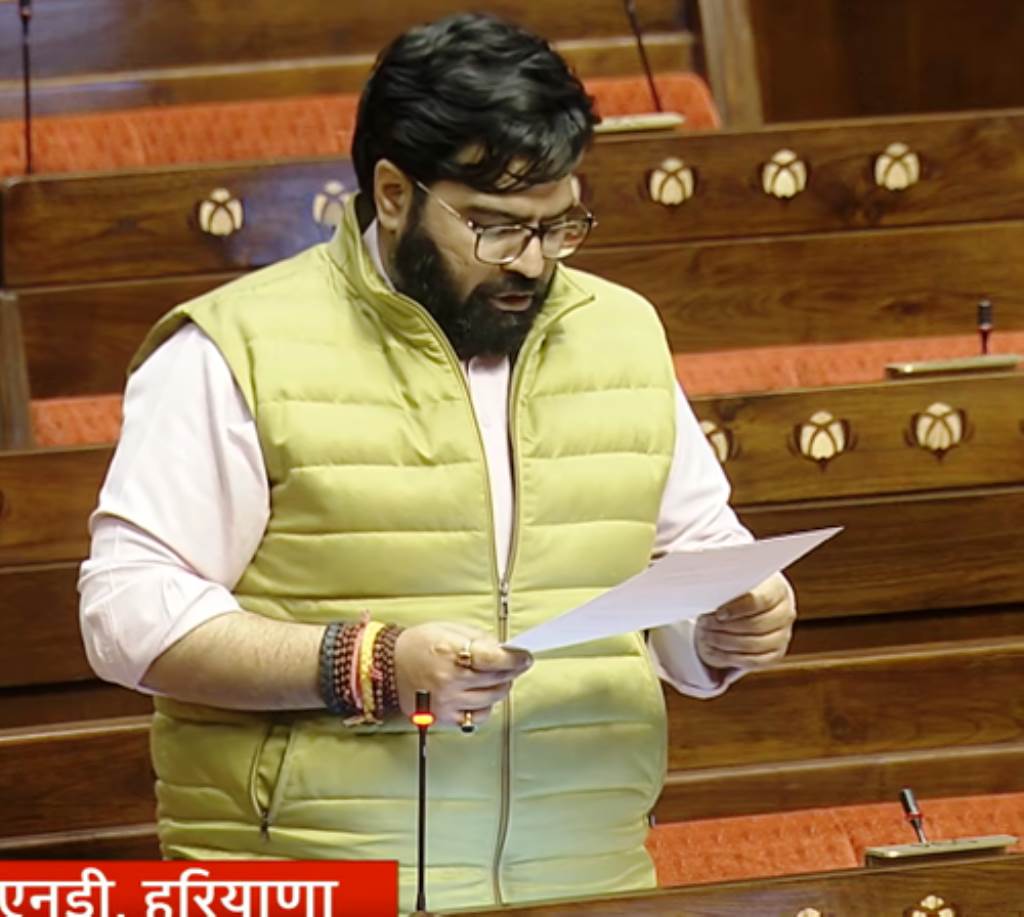
Ambala, 3 February:- Rajya Sabha member from Ambala, Kartikeya Sharma, during the Budget Session in Parliament, raised important issues concerning the participation of retail investors in high-risk derivatives trading (F&O) and the effective implementation of mental health insurance coverage. This intervention was made in the context of increasing financial and mental stress on citizens.
According to Shri Sharma, the objective of this initiative was to seek fact-based clarity from the government, especially at a time when the Central Budget 2026 places special emphasis on financial stability, consumer protection, and health security.
In his parliamentary intervention, Kartikeya Sharma stated that despite the growing retail participation in capital markets, small and first-time investors are facing significant financial losses in derivatives, particularly in futures and options (F&O).
In the government’s reply presented in the House, it was stated that:
In the financial year 2024-25, 10.5 million unique individual investors participated in equity derivatives. As of 30 December 2025, 75.42 lakh retail investors were active in F&O in the financial year 2025-26. According to a SEBI study, retail investors suffered a net loss of ?1,05,603 crore in the financial year 2024-25. The reply also clarified that SEBI has implemented several reformative measures for investor protection, including higher margin requirements, rationalization of derivatives contracts, upfront collection of option premiums, and mandatory risk disclosure on trading apps.
According to Shri Sharma, this issue was particularly raised in the context of protecting household savings and ensuring informed participation, as digital trading platforms are rapidly attracting young and new investors.
Kartikeya Sharma also expressed concern about mental health issues, especially at a time when financial stress is increasing and, despite legal provisions, the utilization of mental health insurance claims remains limited. The government informed the House that insurance companies have aligned their products in accordance with the Mental Healthcare Act 2017. Mental health treatment is covered on par with physical illnesses. Many insurance products now include outpatient support, therapy and counselling, wellness sessions, and e-counselling. IRDAI has advised insurers to work towards 100% cashless treatment including outpatient care. However, it was also noted in the reply that separate data on mental health insurance claims is not available, which highlights the need for continuous monitoring and public awareness.
In line with Budget 2026, emphasis has been placed on protection and wellness, which reflects the broader spirit of the Central Budget 2026 — emphasizing growth along with protection, responsible financing, and health systems, while reducing stress and uncertainty.
By raising these issues, Kartikeya Sharma emphasized the need for fact-based policy-making so that economic participation does not turn into financial distress and mental health remains an integral part of India’s healthcare framework.