
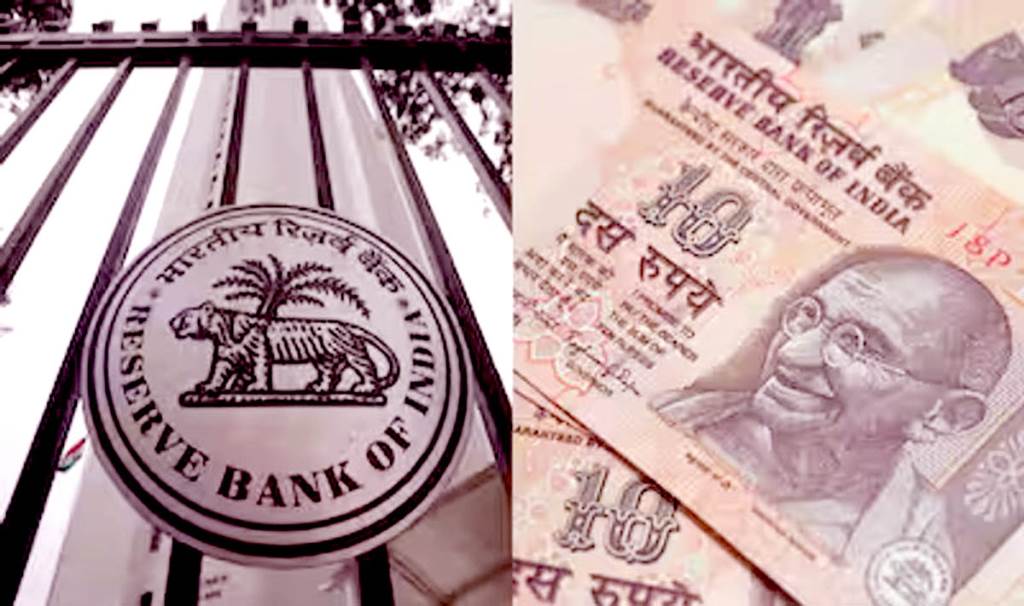
New Delhi:- Seeing the ever-increasing demand for cash (currency) in the country, the Reserve Bank of India has once again started considering the plan to introduce 'polymer' (plastic) banknotes in India. According to media reports quoting sources, there was a serious discussion on the issue of issuing plastic currency during the recent board meetings of the RBI held in Patna and Mumbai.
The main reason for reconsidering polymer notes is that they are much more durable than the current cotton paper notes and their lifespan is also longer. Along with this, from a long-term perspective, the cost of printing them is also less than traditional paper notes. The central bank may soon announce a 'pilot project' (trial) in this regard and these notes will be easily withdrawn through ATM machines.
According to the RBI's annual report for the financial year 2024-25, the cost of printing banknotes in the country has increased from Rs 5,101.4 crore to Rs 6,372.8 crore. The main reason for this is the increase in demand for new notes in the market.
Apart from this, destroying dirty and soiled notes is also becoming a big challenge for the bank. During the financial year 2025, about 23.8 billion soiled notes were withdrawn from circulation, which is 12.3 percent more than the 21.24 billion notes in the previous year. The most damaged notes in the market were of Rs 500, while the second most damaged notes were of Rs 100.
What are polymer banknotes?
Special 'bi-axially oriented polypropylene' films are used to make polymer notes. These notes include modern security features and advanced anti-counterfeiting elements, making it almost impossible to print counterfeit notes.
These notes are not damaged by water (swelling), bending and bacteria. Australia was the first in the world to introduce polymer currency in 1988 and by 1996 it had completely stopped using paper notes. Similarly, Canada also adopted plastic notes in 2011 due to its environmental friendliness.