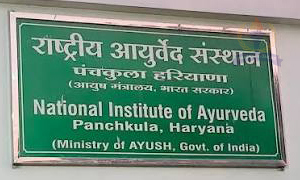
Chandigarh, 14 October:- The National Institute of Ayurveda (NIA), Panchkula, is set to expand the scope of Ayurveda education and medicine. The institute will train specialist doctors, giving a fresh impetus to research and innovation. The National Commission for Indian System of Medicine (NCISM) has approved 70 seats across 14 postgraduate (PG) courses at NIA. New admissions to these PG courses will begin in the academic session 2026–27.
NCISM has issued a Letter of Permission (LOP) to NIA, Panchkula, allowing it to introduce 14 PG courses with 70 seats. Operating as an off-campus centre of the National Institute of Ayurveda, Jaipur, a deemed university, NIA Panchkula has opened new avenues for higher education in 14 disciplines of Ayurveda. At present, the institute has 100 seats for the Bachelor of Ayurvedic Medicine and Surgery (BAMS) programme. Its first batch commenced in 2024–25, followed by admissions for the 2025–26 batch.
Counselling for the third BAMS batch for 2026–27 is currently underway, and two rounds have been completed.
Dean Professor Gulab Chand Pamnani said the achievement had been made possible through the tireless efforts of the institute’s Vice-Chancellor, Professor (Dr.) Sanjeev Sharma, under the Ministry of Ayush, Government of India. Approval for the 14 PG courses will provide fresh momentum to Ayurveda education, the training of specialist doctors and research.
Professor Satish Gandharv, Dean-in-Charge of the institute, thanked Vice-Chancellor Professor (Dr.) Sanjeev Sharma on the approval of the PG courses. He said NIA was establishing a distinct identity as a new centre for Ayurveda education, medicine and research in North India. The introduction of PG courses would further strengthen Ayurveda medicine and help fulfil the aspirations of young people seeking specialised higher education.
Higher Education to Be Available in 14 Ayurveda Disciplines: Professor Gulab Chand Pamnani
Dean Professor Gulab Chand Pamnani said the new PG courses would cover Ayurveda Samhita, Siddhanta and Sanskrit; Rachana Sharir; Kriya Sharir; Dravyaguna Vigyan; Rasashastra and Bhaishajya Kalpana; Roga Nidana and Vikriti Vigyan; Agad Tantra and Vidhi Vaidyaka; Swasthavritta and Yoga; Kaumarbhritya-Bala Roga; Kayachikitsa; Panchakarma; Stri Roga-Prasuti Tantra; Shalya Tantra; and Shalakya Tantra. Five seats have been allocated to each course. Of the five seats in Shalakya Tantra, three are designated for ear, nose and oral disease medicine, while two are for ophthalmic medicine. The 2026–27 academic session will offer young people the opportunity to secure admission to the 70 PG seats.
Fourteen PG Courses to Give Fresh Impetus to Higher Ayurveda Education: Professor Sanjeev Sharma
NIA Vice-Chancellor Professor (Dr.) Sanjeev Sharma said approval for 70 seats across 14 postgraduate courses was a major achievement for the institute. The PG programmes would provide new momentum to higher education in Ayurveda and help train specialist doctors in different disciplines.
Professor Sanjeev Sharma said the institute aimed to provide students with a better academic environment, quality training and practical experience so that they could use their expertise to deliver improved healthcare services to society. The new PG courses would also encourage students and faculty members to advance in research.