Hoshiarpur/Railmajra, Daljit Ajnoha:- Established to promote technical, vocational and skill-based higher education in Punjab, Lamrin Tech Skills University, Punjab, is working towards preparing young people to meet the requirements of modern industries. Located in the Railmajra area of Shaheed Bhagat Singh Nagar district, the university places special emphasis on providing students with practical training and industry-linked education alongside conventional academic knowledge.
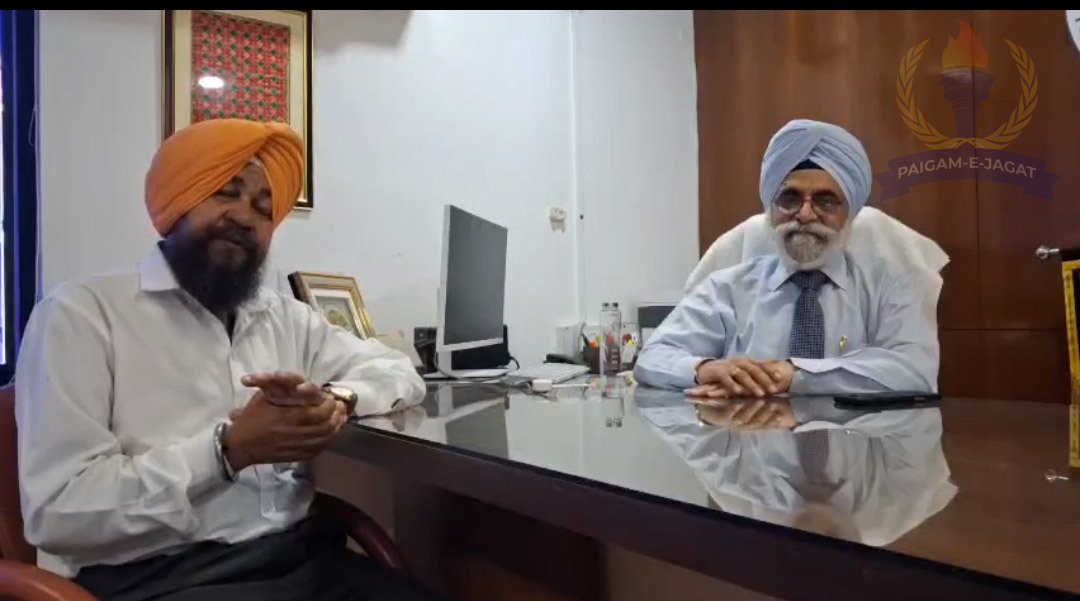
As part of this initiative, senior correspondent Daljit Ajnoha held an exclusive conversation with the university’s Vice-Chancellor, Prof. (Dr.) Arvinder Singh Chawla. The discussion covered important subjects, including the courses offered by the university, modern technical education, facilities available to students, industry partnerships and employment-oriented training.
According to information available on the university’s official website, Lamrin Tech Skills University, Punjab, was established under Punjab State Act No. 22 of 2021 and is recognised by the University Grants Commission (UGC). The university is developing itself as an institution offering skill-based education aligned with industry requirements.
In today’s competitive environment, obtaining an academic degree alone is no longer sufficient. Technical proficiency, problem-solving abilities, digital knowledge and practical workplace experience have also become important for students. Keeping these requirements in mind, the university emphasises industry-based training and practical learning in its academic programmes.
The university offers specialisation options in programmes related to Computer Science and Engineering, focusing on modern technologies such as Artificial Intelligence and Machine Learning, Cybersecurity, Data Science and the Internet of Things.
According to details published on the university’s website, some B.Tech programmes in Computer Science and Engineering also include industry training or on-the-job deployment opportunities for students. This can provide students with opportunities to apply their technical knowledge in real-world working environments.
Eligibility criteria, course duration, training arrangements and admission requirements vary according to the respective programme.
A key feature of Lamrin Tech Skills University’s academic system is its collaboration with industries. The university’s official website mentions associations with various industry and skill-development partners, including IBM and Larsen & Toubro (L&T).
The objective of such collaborations is to familiarise students with modern technologies, industry operations and practical skills. Through industry-oriented technical programmes and laboratory-based training, the university seeks to prepare students for changing employment requirements.
However, academic collaboration with an industry does not guarantee a job or placement with that company. Students should verify the actual training arrangements, eligibility criteria and placement conditions of the relevant programme before seeking admission.
The university’s website also mentions skill-based programmes conducted in collaboration with RailTel and the National Skill Development Corporation (NSDC). These programmes aim to develop a trained workforce suited to the requirements of the railway sector and its associated technical and support fields.
According to the available information, these programmes cover subjects such as Logistics and Supply Chain, Catering Technology, Cybersecurity, the Internet of Things, Railway Control and Safety Systems, Electric Traction, Bridge Design, Tunnelling and Data Analytics.
Some programmes are offered as diplomas, while others are available as short-term certificate courses. Their duration and admission requirements are determined according to the respective course.
Such training programmes may be useful for young people and working professionals who wish to enhance their technical expertise in a specific field or upgrade their existing skills.
In addition to technical education, the university’s skill-based education portal lists courses in areas such as Hospitality and Hotel Management, Food Safety and Quality Management, Oil and Gas Safety Operations, Management Studies, Business Administration, Hospital Administration and Healthcare Services.
Students interested in these fields should obtain information about the academic eligibility requirements, recognition of the courses, training methods and potential career opportunities associated with the relevant programmes.
The university’s website also provides information about various skill-based degree programmes, diplomas, certificates and credit-based education options. The availability of these programmes and their current admission status should be confirmed with the university.
Alongside academic activities, a conducive learning environment and essential infrastructure are also important components of higher education.
According to information available on the university’s official website, the campus features science laboratories, computer laboratories, Wi-Fi, smart classrooms, seminar halls, a laptop laboratory, sports grounds, an open gym, hostels, transport facilities and a medical care centre.
The university’s website also provides details of separate hostels for boys and girls, along with round-the-clock ambulance assistance on campus. These facilities aim to provide students with the necessary environment for learning, training and campus life.
Before seeking admission, students and parents should directly verify hostel availability, transport routes, fees, medical facilities and other relevant rules.
The National Education Policy places emphasis on practical knowledge, skill development, multidisciplinary education and employment-oriented training. In this context, designing courses according to industry requirements has become increasingly important for higher education institutions.
Lamrin Tech Skills University’s skill-based education model is also aligned with this need. Its academic initiatives aim to equip students with technical proficiency and practical experience, helping them prepare for employment, further education or entrepreneurship opportunities across different sectors.
Prof. (Dr.) Arvinder Singh Chawla assumed charge as the university’s Vice-Chancellor on July 9, 2025. In his message published on the university’s official website, he highlighted skill-based education, industry-aligned training, innovation and the holistic development of students as important priorities.