Mohali (Jagmeet Ghuman):- Doctors at Max Super Speciality Hospital, Mohali, successfully treated a 31-year-old resident of Kangra who had suffered severe intestinal injuries in a road accident through a complex two-stage surgical procedure. The surgery successfully restored the continuity of the patient's intestines and helped him recover from a life-threatening condition.
Manoj Kumar, a resident of Kangra, was riding a motorcycle when he met with a road accident, sustaining serious abdominal injuries. He was admitted to Max Hospital, Mohali, for specialised treatment. Before reaching the hospital, he had vomited 8–9 times and had been unable to pass stool or gas for the preceding four days. Investigations revealed an obstruction in his small intestine, making immediate surgery necessary.
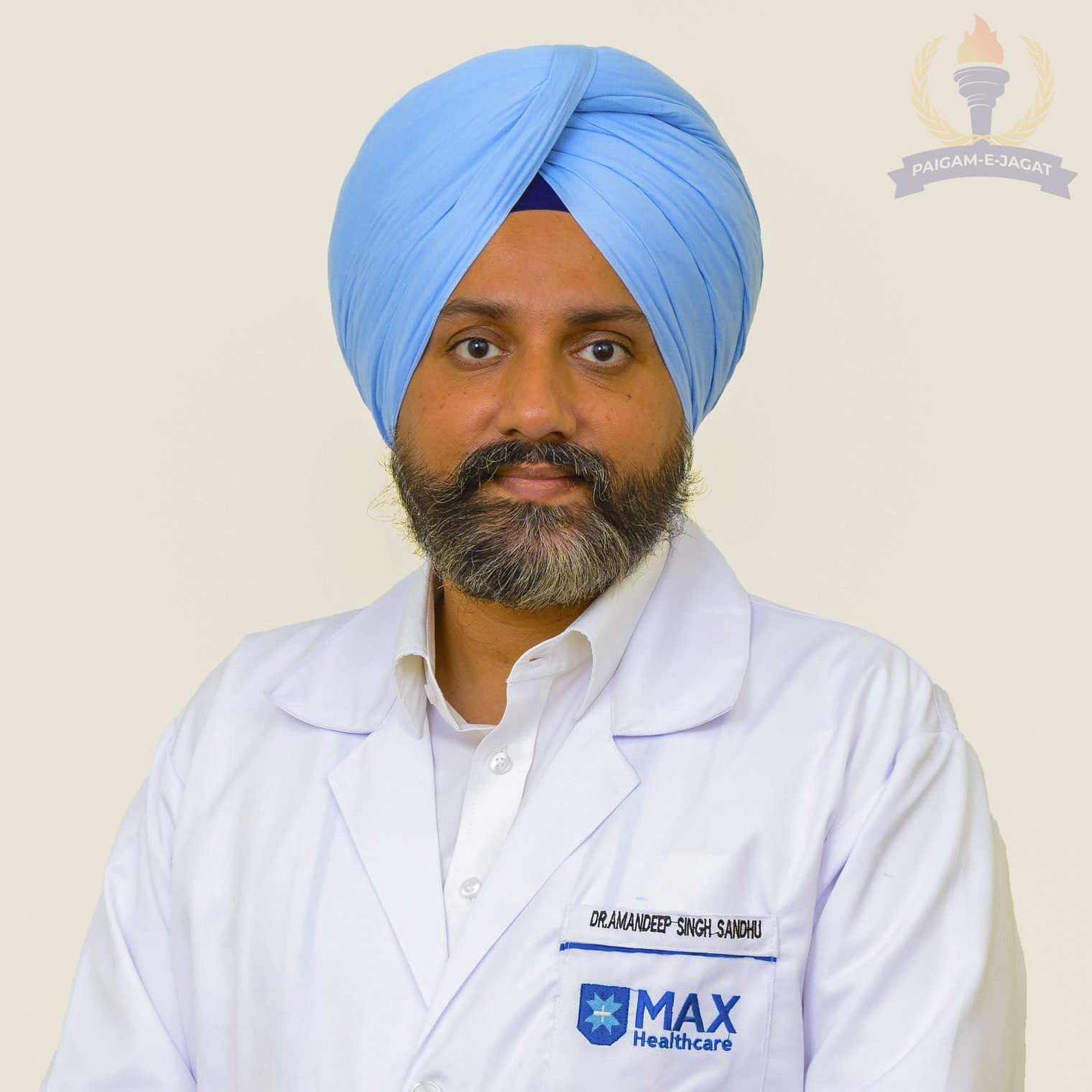
Under the supervision of Dr. Amandeep Singh Sandhu, Associate Director, Department of GI, MAS and Bariatric Surgery, the patient underwent an emergency exploratory laparotomy. In this procedure, the abdomen was opened to assess the condition of the internal organs and the severity of the injuries. During the surgery, the damaged portion of the small intestine was removed. An end ileostomy was also performed, in which an artificial opening is created in the abdomen to allow intestinal waste to collect in an external bag.
After his health improved following the first surgery, the patient was readmitted to Max Hospital for the second stage of treatment. This stage involved closing the ileostomy and restoring normal intestinal continuity.
Dr. Sandhu and his team performed an end ileostomy closure with ileo-ascending colon side-to-side anastomosis using an Endo-GIA stapler. In this procedure, the terminal part of the small intestine (ileum) was reconnected to a section of the large intestine (ascending colon) to restore the normal flow of intestinal contents.
During the second surgery, the medical team also performed adhesiolysis, a procedure to remove internal scar tissue and adhesions that had formed around the small and large intestines. In addition, a liver biopsy was performed in view of the abnormal liver function test reports.
Dr. Sandhu said, “The treatment of complex intestinal injuries often requires a planned and staged surgical approach. In this case, the damaged intestine was removed during the first surgery, while the second surgery restored normal intestinal continuity. Careful surgical planning and appropriate post-operative care were crucial during both stages of treatment.”