
Industries play an important role in the economic development of any region. Through industries, employment opportunities are created, local businesses get a boost and the government gets income. With the establishment of industrial units in rural areas, possibilities of increase in people's income and acceleration of economic activities are created. But this process of development can prove beneficial only when along with it people's health, workers' rights and protection of environment are also ensured. If people have to pay the price of industrial progress in the form of polluted air, contaminated water, deteriorating soil and exploitation, then such development moves away from its basic purpose. In an agrarian state like Punjab, this issue is even more important. A large population here lives in villages and a large part of people's livelihood depends on agriculture, animal husbandry and businesses related to it. It is necessary to keep these aspects in mind at the time of establishment of industrial units. If dirty water, smoke, chemical waste coming out of a factory is not handled properly, its impact can be on the surrounding water, soil, crops and people's health. Therefore, before giving approval for setting up an industry, a scientific assessment of the geographical condition of that area, water sources, agriculture and population should be done.
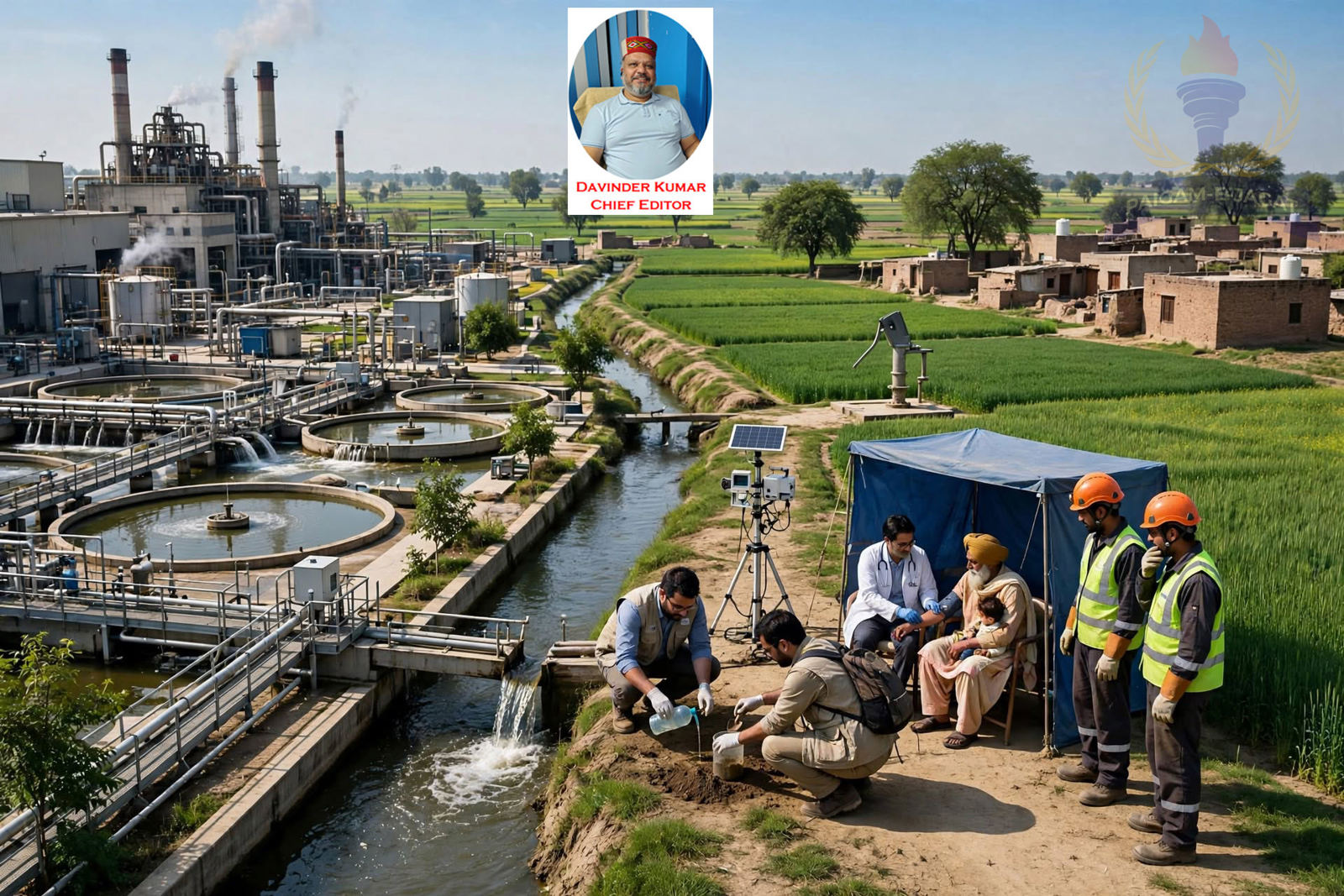
The concerns expressed by the residents of surrounding villages regarding an industrial unit located in a village have re-highlighted the importance of monitoring industrial units. In this case, along with collecting samples of water, soil and ash, the process of checking air quality and setting up camps for health check-up of people has also been started. The importance of such investigations is not limited to one factory or village. Monitoring of environment and health around industrial areas should be continuous. It is not enough to investigate only after receiving a complaint. Regular checking of pollution control arrangements of industrial units should be done. The performance of plants installed for treatment of dirty water in factories, smoke coming out of chimneys and disposal of solid waste should be checked as per fixed schedule. Water samples should be taken not only from inside the factory, but also from surrounding borewells and water sources. Study of soil quality and possible impacts on crops should also be done. Investigation reports should be available to common people and representatives of villages should be included in the monitoring process.
Another important aspect of industrial development is the condition of the workers working there. Creation of employment opportunities alone is not enough, it is also necessary to see whether those who work are getting due value for their labour or not. At many places, complaints like taking work beyond stipulated time, not paying full overtime, giving less wages, depriving of holidays and evading accountability under contractual arrangements keep coming up. Keeping temporary and contract-based workers away from social security, health facilities and job stability is also a serious problem. There should be necessary arrangements for the safety of workers working with machines, chemicals and heavy goods in factories. Safety equipment, clean drinking water, ventilation, first aid and training to prevent accidents is their right. It is also necessary to get compliance with rules regarding working hours and rest time. There should be regular inspection by the Labour Department and workers should get opportunity to register their complaints without fear. The success of industries should be assessed not only by production and profit, but also by the welfare of those working there.
The responsibility of industrial units should not be limited to compliance with government rules only. Reuse of water, saving of energy, smoke control technology and safe disposal of waste should be made part of the working system. If environment or health of workers is harmed due to negligence of a unit, then its responsibility should be fixed and action for improvement and compensation should also be taken. Industrial development and people's welfare are not opposite to each other. There is need for such policy and working system in which employment, economic progress, workers' rights and environment get equal importance. Real progress is that in which along with industries getting profit, the life of common people also becomes better.
- Davinder Kumar