
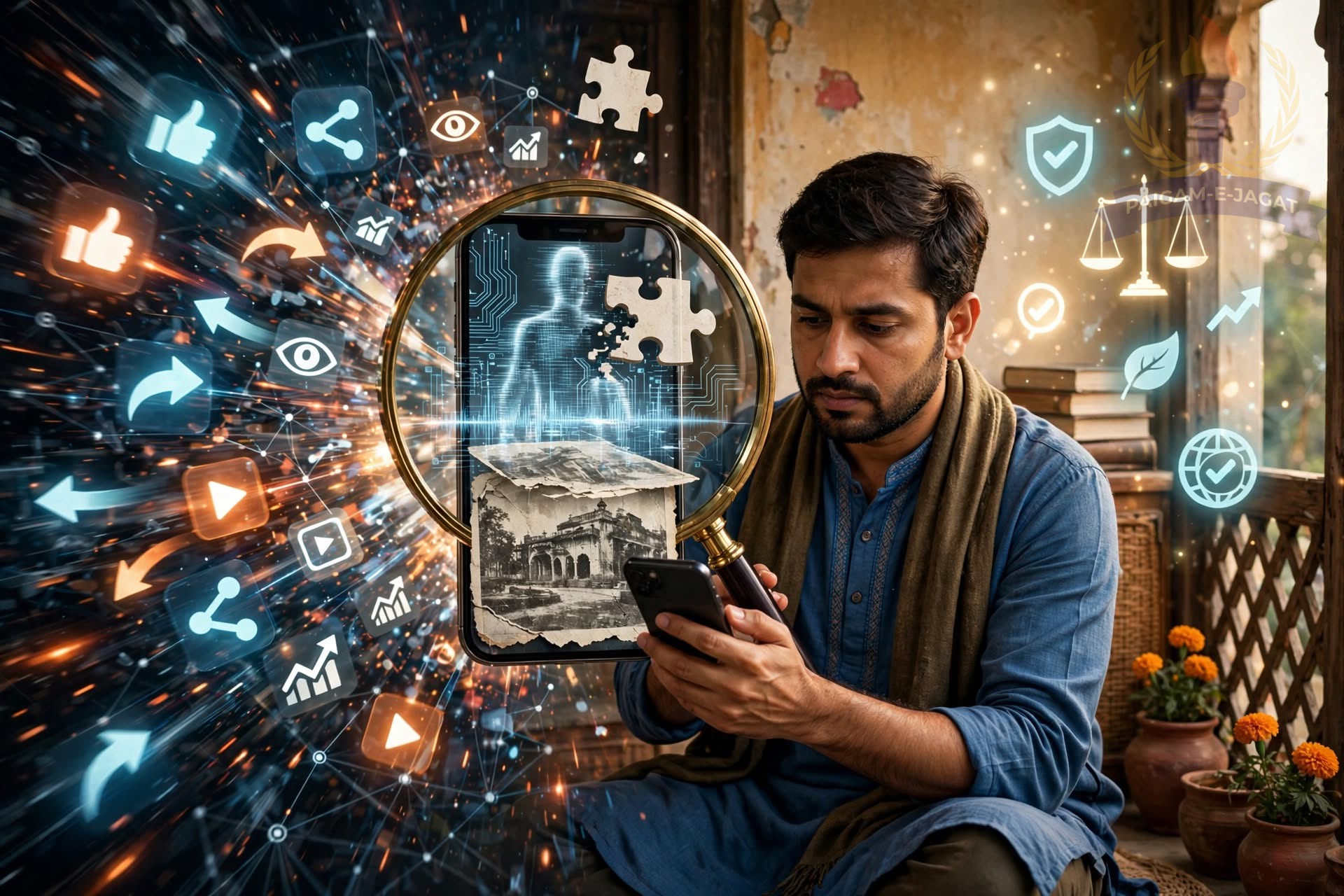
In today's digital era any news, picture or video can reach thousands and lakhs of people within few minutes. Mobile phone has made access to information very easy. There is no need to wait for next day's newspaper or television bulletin to get information about any incident. But this fast speed of information has also brought a big challenge with it. Thing which is being shared most may not necessarily be true.
On social media meaning of a post going viral is only that it has reached large number of people. Its truth cannot be decided by number of likes, shares, comments or views. Sometimes an emotional picture, surprising headline or short video attracts attention of people so quickly that time is not taken to check its background and context. Another aspect of this problem is that correct information and wrong information sometimes come in same form. An old picture can be linked with new incident, some old video can be presented by linking with new location or some incomplete statement can be spread by separating from whole context. Apart from this, pictures, voices and videos made or altered with artificial intelligence have made it more difficult to identify whether content coming in front is real or altered.
In India also various arrangements have been made to deal with wrong and misleading digital content. Press Information Bureau's Fact Check Unit had given information of issuing more than 2,900 fact-checks till April 2026. By this unit suspicious information related to government matters is checked through official sources. But checking of every information cannot be done by any government or private institution. Here role of people becomes important. Before forwarding any message seeing where it came from, what is its date, whether any reliable source has also given this information and whether picture or video is related to same incident, can be a small but important precaution. In this matter role of source of news is also important. In digital competition speed may be necessary, but speed and reliability cannot be considered same thing. A wrong information can spread within few seconds, but it may take many days to correct it and it may be difficult for correct information to reach every person who had seen wrong information earlier.
Only false information is not matter of concern. Incomplete truth can also sometimes create wrong impression. A picture of an incident may be true, but its description may be wrong. A part of a statement may be correct, but because whole context is not in front its meaning may change. Therefore it is not enough to see only whether content is completely false or not. It is also necessary to see how much complete and with context it is.
Need to give more attention to digital literacy in schools and families is also felt due to this reason. It is not enough to teach children and youth only to use internet. It is also necessary to teach them habit of identifying source, checking pictures and videos, matching information with different sources and not spreading suspicious content further. Question of responsibility is also linked with increasing reach of digital platforms. For platforms this is challenge that how to make balance between open flow of information and spread of wrong content. On other side, for governmental and public institutions giving clear and easily available information in time is important. The clearer and accessible official information will be, that much easier it may be for people to check any claim. Lack of information is not, but identification of reliable information is becoming big challenge. Therefore reaching first of any news cannot be its biggest quality and going viral is not proof of its truth.